Discover
Clarify the project context, audience, output, references and constraints.
An original AI short film drama about emotional distance, fractured intimacy and the final minutes before a relationship changes forever — developed through human-directed cinematic storytelling, character continuity and a warm broken-light visual language.
 126 LABS / HUMAN-DIRECTED AI SHORT FILM
A cinematic moving-image sequence from the 11:57PM world, preserving the same characters, Paris atmosphere and warm fractured-light language established across the key art.
The project needed to move beyond a portrait study and become a believable short-film property: two central characters, a dramatic emotional hook, cinematic atmosphere and enough visual continuity to support a complete narrative world across key art, teaser frames and film presentation.
126 LABS developed 11:57PM as a human-directed AI short film drama. The visual system combines intimate close framing, restrained black wardrobe, realistic skin detail and fractured amber light to create tension between closeness and emotional distance. The same film language is designed to scale into moving-image sequences, teaser assets, poster art and campaign material.
AI short film concept · Creative direction · Narrative world building · Character and visual continuity · Cinematic key art · Teaser and campaign-ready visual system
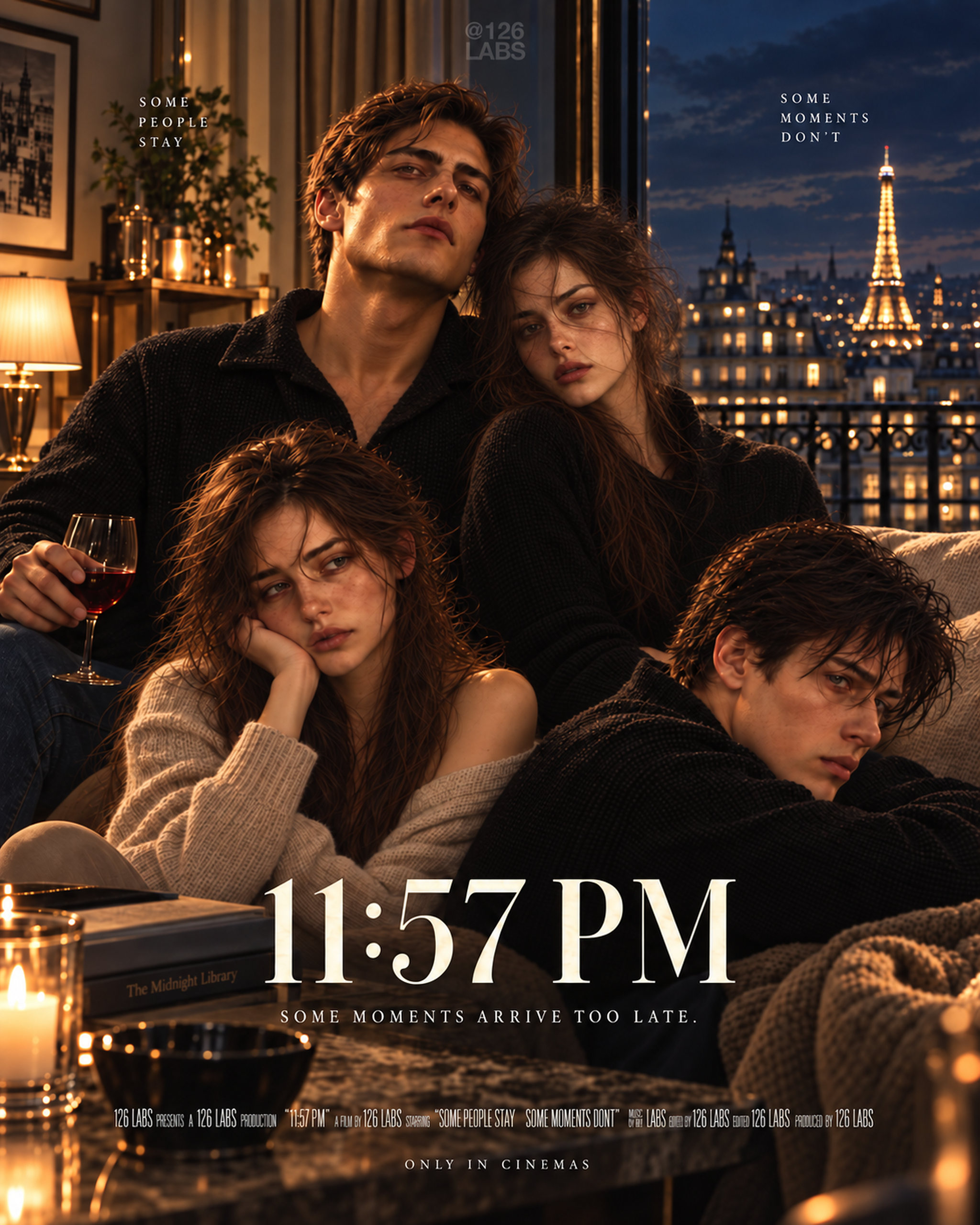
Three high-resolution 2K poster compositions from 11:57PM. The ensemble key art is held in the center, with two cinematic story posters framing it.
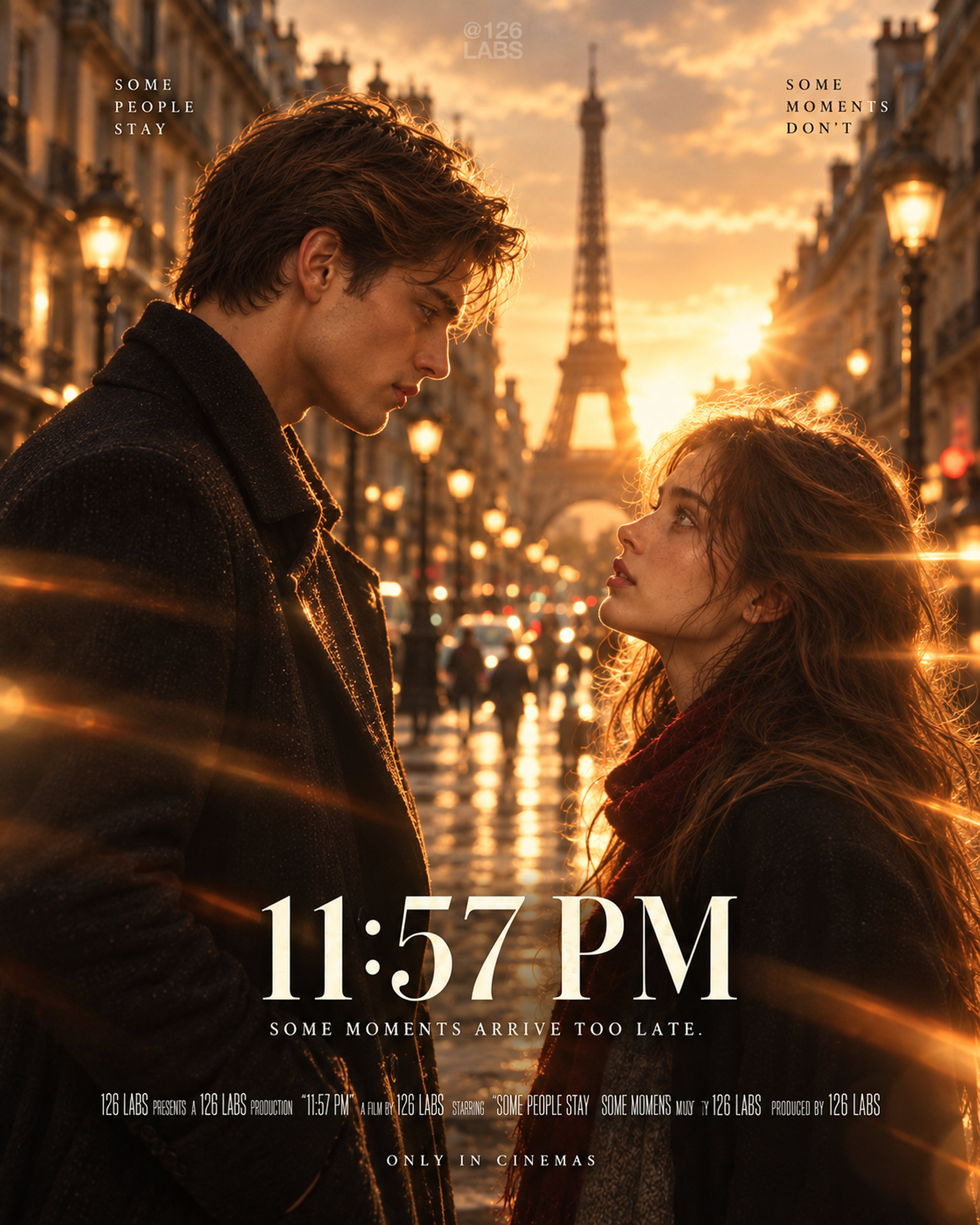
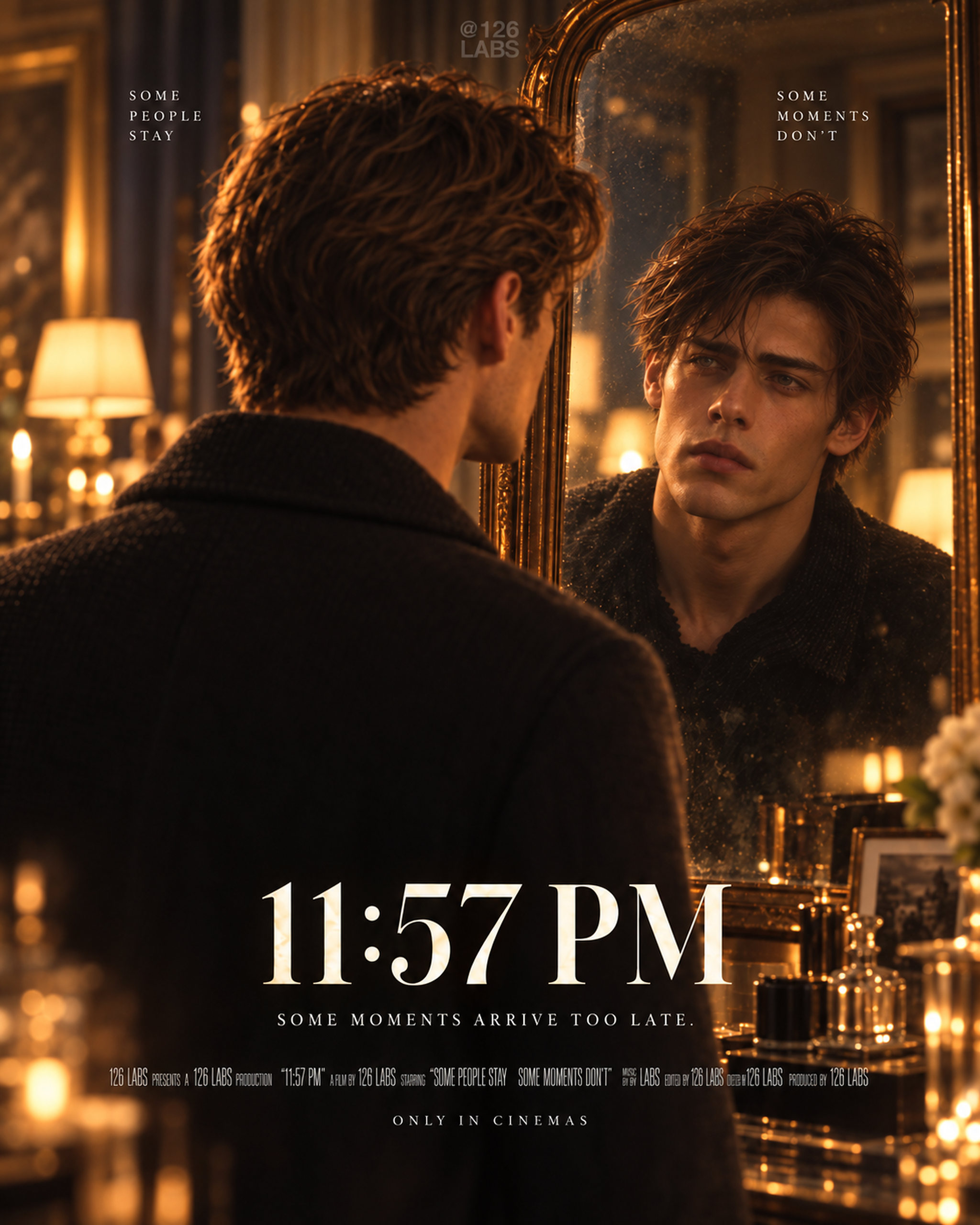
Four high-resolution 4:5 character studies used to establish continuity before the film-poster system.
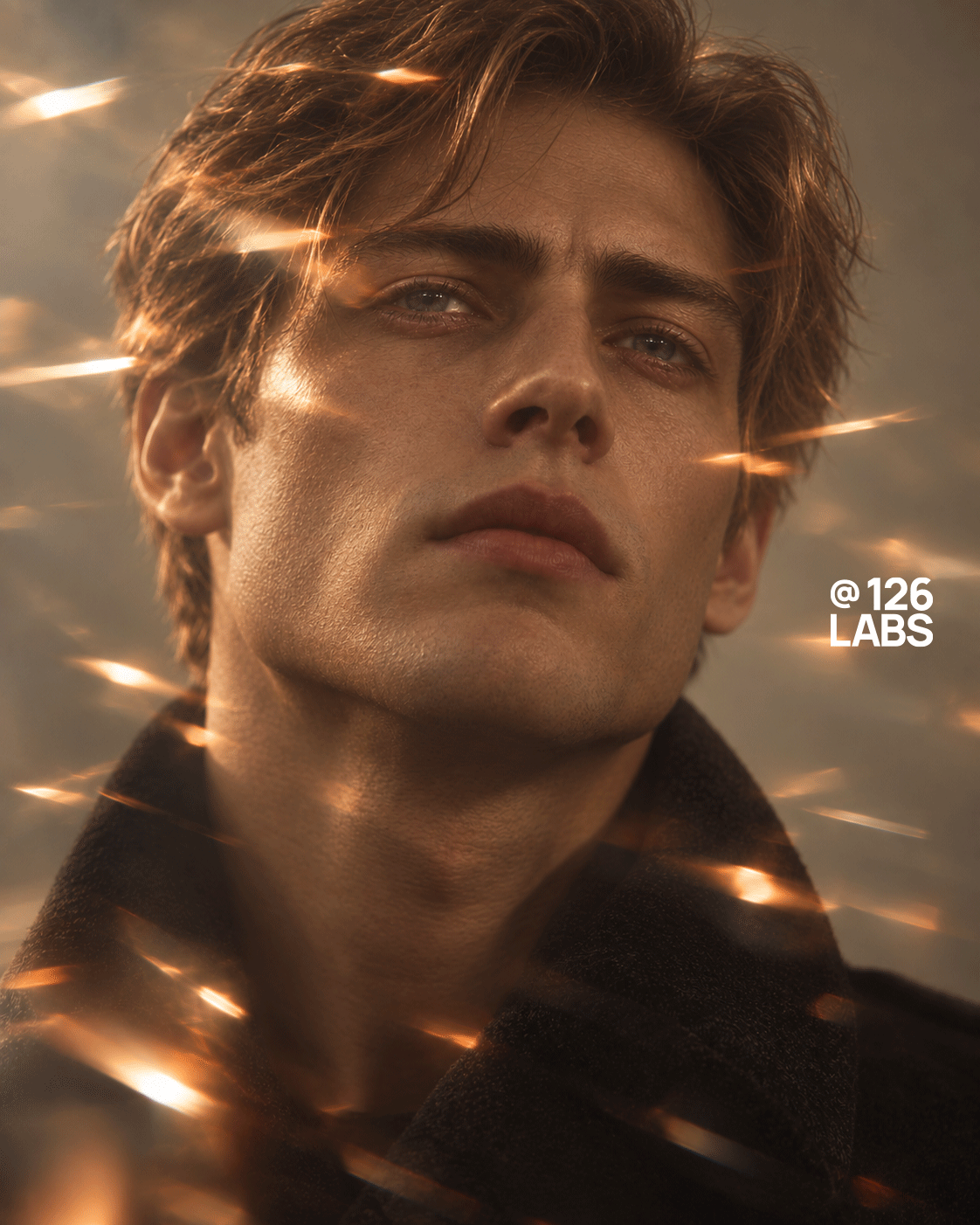
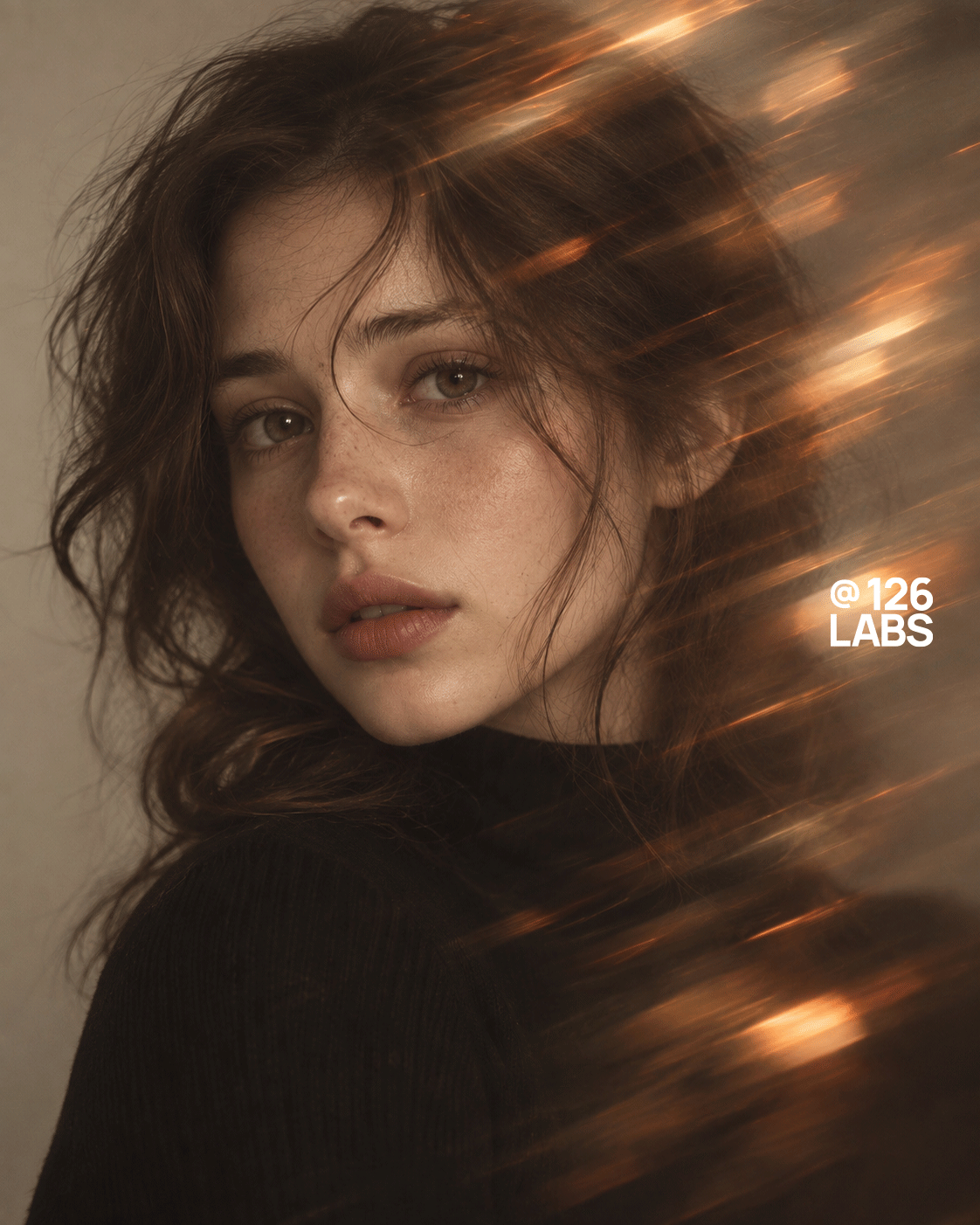
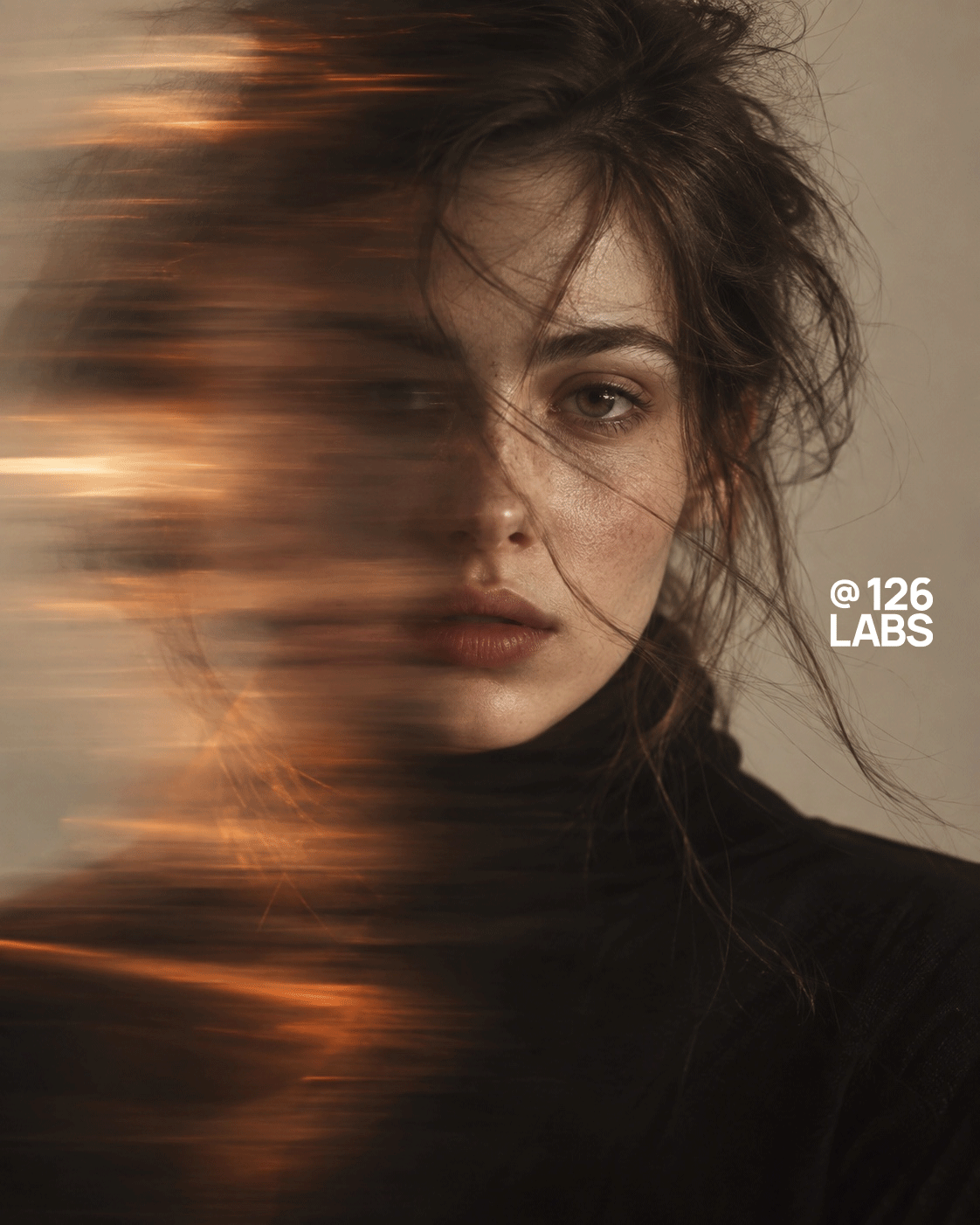
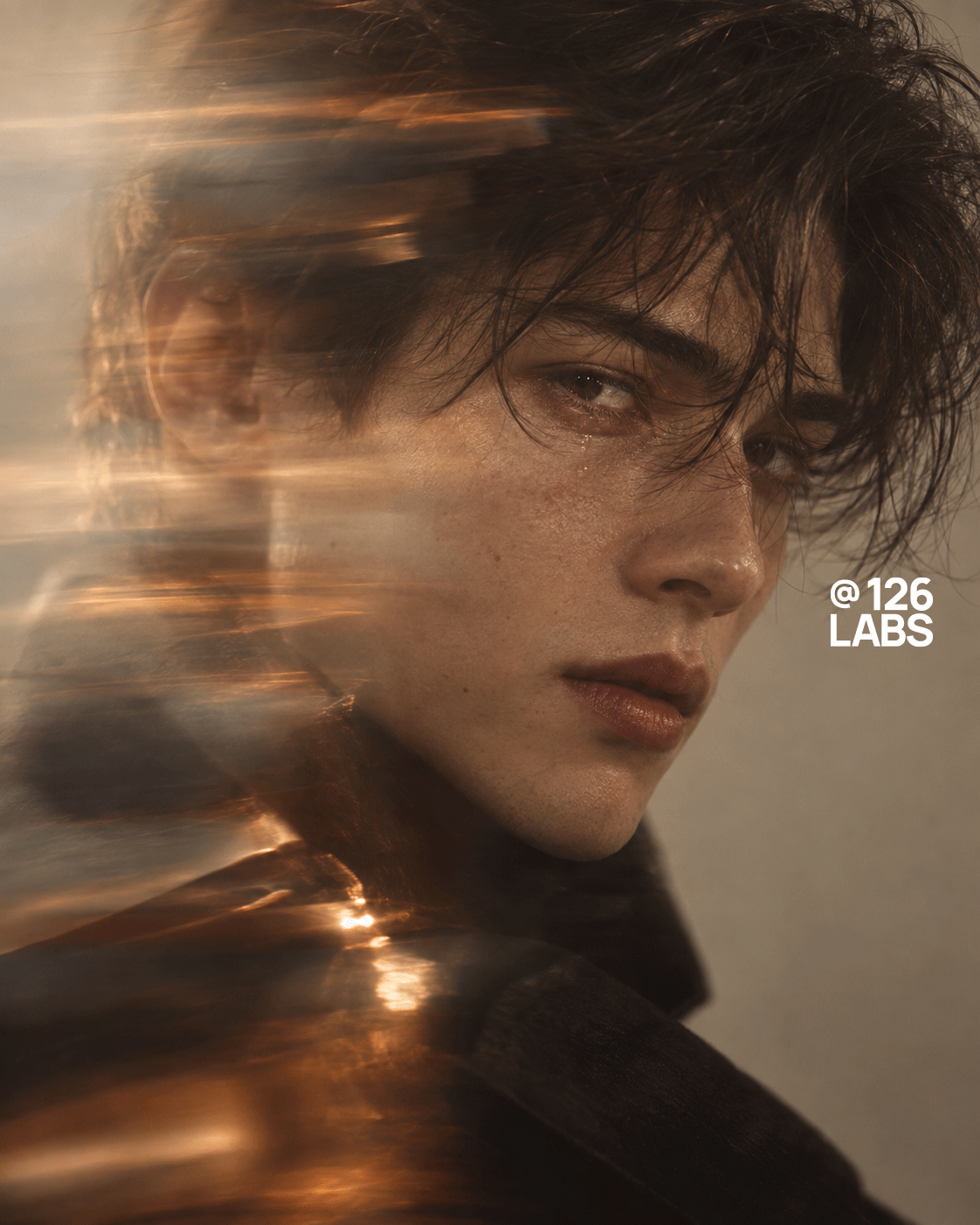
11:57PM is an original AI short film drama by 126 LABS, developed through cinematic storytelling, character continuity, fractured amber light and human-directed AI film production.
11:57PM is an original AI short film drama centered on two people caught in the final minutes before an emotional decision changes the relationship between them. The title becomes a dramatic threshold: a moment suspended between what has already happened and what cannot be taken back after midnight.
The film is designed around intimacy rather than spectacle. Close framing, pauses, gaze direction and fragmented light carry the tension, allowing small emotional shifts to feel cinematic.
The story world is contemporary, restrained and emotionally ambiguous. The two leads are visually connected but psychologically separated, creating a romantic-drama tension in which the audience is invited to read what is left unsaid.
Rather than explaining every event, the short-film structure relies on fragments of memory, present-time confrontation and visual callbacks. This gives 11:57PM the compressed intensity needed for a cinematic short format.
Warm amber fractures of light act as a recurring film motif. They suggest memory, emotional disruption and time breaking across the characters while keeping the palette recognizable from frame to frame.
Black wardrobe, neutral environments, realistic skin texture and close lens language keep the imagery grounded. The visual target is premium dramatic cinema rather than a synthetic AI aesthetic.
The production approach treats AI as part of a directed filmmaking workflow. Character continuity, facial anatomy, wardrobe, lens feel, lighting behavior and emotional performance are evaluated as connected production variables rather than isolated generations.
Development moves from premise and look direction into storyboard logic, key frames, motion tests, scene continuity, edit structure and finishing. Human direction remains responsible for narrative choices, performance selection and the final cinematic rhythm.
The official 11:57PM poster is the principal key art for the film. It brings the four-character composition into one cinematic Paris-night scene, preserving the intimate drama, warm lighting and emotional distance established across the production frames.
Across the website, a cinematic Paris frame is used as the project thumbnail while the official poster remains the primary key art inside the case study.
11:57PM demonstrates how generative tools can be used to develop an original narrative property rather than a collection of disconnected images. The project combines story development, cinematic art direction, character consistency and production design inside one AI-assisted film workflow.
For 126 LABS, the case represents a move toward authored AI cinema: short-form storytelling where technology expands production possibilities while creative direction, editing and emotional intent remain human-led.
Clarify the project context, audience, output, references and constraints.
Define the creative idea, visual rules, production logic and review checkpoints.
Generate, build, compare and correct the work while protecting continuity and taste.
Retouch, edit, grade, optimize and prepare final assets for real channels.
AI Commercial / Branded Film / 2026